Principal’s Post for January 3, 2021

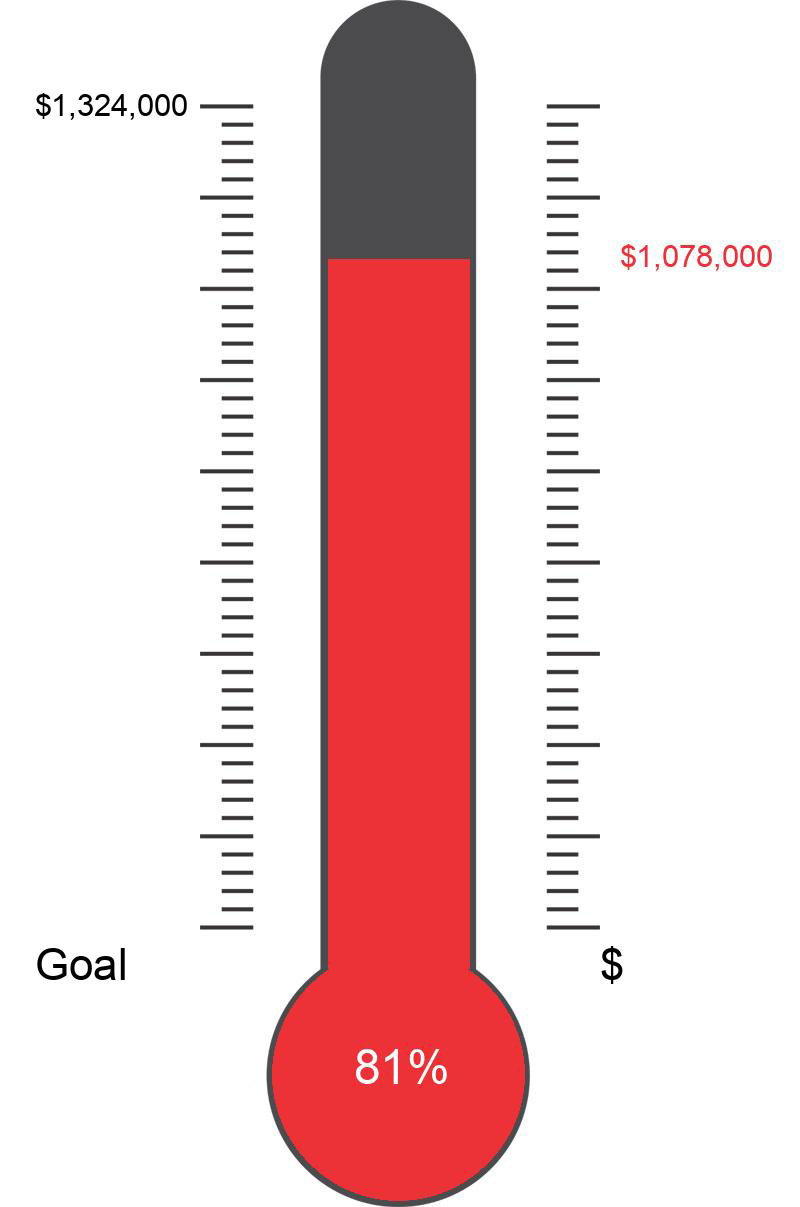
MVSTO:  We Made It!

Thank you to everyone who helped the Mississippi Valley School Tuition Organization (MVSTO) meet its 2020 goal.  We could not do it without donors and those who pass the word along about the need for the donations!  The MVSTO provides tuition assistance to more than 620 students in Scott County.  That figure represents about 35% of all students.  The state authorized amount that could be raised in 2020 and can now be distributed in 2021 is just over $1.3 million.

Civic Oration Results Later This Week

We hope to have have our 5th-8th grade civic oration results for the finalists later this week.  Again, I must congratulate all of our 5th-8th graders in adapting to doing recorded speeches.  It’s so awkward talking to just a camera!

COVID Data

Below is a link to a .pdf file that shows several graphs of Scott County and JFK data.  Although there was no school for the last two weeks, we did have a December 30th meeting with the Scott County Health Department.

I’ll add a few comments below as well.

COVID Data, December 30, 2020

  • The Scott County 14 day positivity rate the Department of Education uses was at a recent lowest level on December 26th and 28th (11.8%).  Scott County hadn’t seen that rate since late October.  Since December 28th, however, the rate has ticked up slightly each day.  This morning, it was listed as 13%, and, this afternoon, it is listed as 13.1%.
  • Correct mask usage for students and staff has been around 94%-95% as measured by about 15 walkthroughs over five days before break.  The most common improper usage observed is a mask that has slipped below one’s nose.  Health experts say the target should be at least 95% for proper mask usage.
  • Portable air purifiers will be placed in each classroom soon.  With the temperatures falling, we’re in a constant battle of keeping windows cracked open for ventilation and rooms being harder to keep properly heated.  Although portable units are undersized, they should give us some more options to help.

Upcoming Dates

  • Jan 4:  School starts again
  • Jan 14:  Parent University via Zoom.  Topic:  Screen time (How fitting?!)
  • Jan 18:  Martin Luther King Day, no classes.
  • Jan 21:  Home & School
  • Jan 29:  End of 2nd Quarter
  • Jan 30 – Feb 6:  Catholic Schools Week

Catholic Schools Week

Almost all of our normal Catholic Schools Week activities involved large gatherings that just won’t be possible this year.  Along with themed attire each day, below are some of our ideas:

  • Movie day with candy suckers
  • Bingo day
  • Pizza and Virtual Field Trip Day
  • Minute to Win It Day
  • Class Act (recorded) and Ice Cream Day

When Did We Become Older?

Thank you for the birthday wishes posted on JFK Moms & Dads.  I had an enjoyable birthday dinner last night with my wife Lynn and Caitlin, who is still home from college.  I think some aspects of getting older are catching up to me!  I had to go out twice yesterday to clean up the sidewalks and driveway from the ice and snow.  I just couldn’t do it all at one time, even with Caitlin’s help!

On Wednesday morning, when I was outside cleaning up from Tuesday night’s storm, I had to wonder, “when did we become some of the oldest people in the neighborhood?”  I own a small snow blower, and as long as I have gas in the tank/can and am not too cold, I will clear our driveway and walks and do the neighbors’ as well.  I’ve also been known to go down the alley to clear out the intersection too (because I tired of having family members get stuck there!)  I started doing the neighbors’ driveways and walks when we first moved in.  The two houses to the west of us had homeowners old enough to be my grandparents.  Across the alley was a woman whose grandson I taught at Assumption.  Next to her was an older couple, and a third house had the daughter of one of the original homes in the area from the 1920s or so.  Whatever help I could give them, I did.  As I was using the snowblower around the neighbors’ yards this past Wednesday morning, it dawned on me just how much things have changed.  A young family with kids at All Saints is across the alley from us.  Next to them is the granddaughter of the homeowners with whom we used to share tomatoes, and she and her husband have two kids not yet in school.  St. Ambrose students are in houses next to us, and the original home of the area just sold.  As I was outside, I began to wonder just when Lynn and I became one of oldest couples on the block.  I wasn’t feeling too bad about it though as the neighbors immediately to our east are about the same age as we are — that is, at least until their daughter came out and asked me if I needed any help!  I could barely speak.  When did I become older?!

Chad


Principal’s Post – Traveling Guidance

Travel and COVID-19

We have had a few questions regarding COVID and traveling over the holidays.  Most notably, people want to know if they have to quarantine after traveling.  Iowa does not currently have travel restrictions or specific orders, like some other locations.  Chicago, for example, requires visitors to quarantine and residents of Chicago to quarantine when they return from traveling themselves.  Davenport and Iowa do not have similar restrictions.

The following is guidance from the CDC (https://www.cdc.gov/coronavirus/2019-ncov/travelers/index.html) and would be most applicable to Iowa and JFK.  Please note that for international travel, there are not too many countries that are not at the highest level (4) of restrictions.  Even the U.S. itself is a level 4.

Domestic and International Travel:

“You may have been exposed to COVID-19 on your travels. You and your travel companions (including children) may pose a risk to your family, friends, and community. Regardless of where you traveled or what you did during your trip, take these actions to protect others from getting COVID-19 for 14 days after travel:

  • Stay at least 6 feet/2 meters (about 2 arm lengths) from anyone who did not travel with you, particularly in crowded areas. It’s important to do this everywhere — both indoors and outdoors.
  • Wear a mask to keep your nose and mouth covered when you are in shared spaces outside of your home, including when using public transportation.
  • If there are people in the household who did not travel with you, wear a mask and ask everyone in the household to wear masks in shared spaces inside your home.
  • Wash your hands often or use hand sanitizer with at least 60% alcohol.
  • Avoid being around people who are at increased risk for severe illness.
  • Watch your health: Look for symptoms of COVID-19, and take your temperature if you feel sick.”

International Travel:

“If you participated in higher-risk activities during your international travel, take the actions listed above AND do the following after travel:

  • Get tested 3-5 days after travel AND stay home for 7 days after travel.
    • Even if you test negative, stay home for the full 7 days.
    • If your test is positive, isolate yourself to protect others from getting infected.
  • If you don’t get tested, it’s safest to stay home for 10 days after travel.
  • Avoid being around people who are at increased risk for severe illness for 14 days, whether you get tested or not.”

“Higher Risk Activities

The following are some activities that put you at higher risk for COVID-19:

  • Travel from a country or U.S. territory with a Level 2, Level 3, or Level 4 Travel Health Notice.
  • Going to a large social gathering like a wedding, funeral, or party.
  • Attending a mass gathering like a sporting event, concert, or parade.
  • Being in crowds like in restaurants, bars, fitness centers, or movie theaters.
  • Taking public transportation like trains or buses or being in transportation hubs like airports.
  • Traveling on a cruise ship or river boat.”

If you have questions, please email them to angie.hillebrand@olvjfkmail.com.  She and I will work together to get your questions answered.

Principal’s Post for December 27, 2020

Last Push for Funding Financial Assistance:  Donations Still Needed by December 31st Deadline

Donations to the Mississippi Valley School Tuition Organization (MVSTO) are still needed.  The deadline to receive the tax benefits for 2020 is December 31st.

The MVSTO provides tuition assistance to more than 620 students in Scott County.  In 2019-20, that figure represented about 35% of all students, and JFK had 36% of its K-8 students receiving financial assistance.  The need only increased in 2020, and no one really knows what 2021-22 will bring.

In order to provide the level of financial assistance needed each year, donations are also needed each year.  Donations to the MVSTO are unique in that they benefit both students and donors.  Students receive the financial assistance needed by their families so they can attend Catholic/private schools, and donors receive a 65% tax CREDIT, not deduction, off of their Iowa taxes, AND the other 35% is a charitable deduction on their federal taxes.  A $500 donation to the MVSTO, for example, allows one to reduce one’s Iowa tax bill by $325, and, at the 32% federal income tax bracket, one might be able to reduce one’s tax bill by about $56.  If you follow the math, a student receives the $500 benefit in financial assistance while the donor has a net cost of, not $500, but only $119!

Donations for this year’s taxes must be made by December 31st.  Act now!  Use the following link for more information and the forms needed:  https://www.mvsto.org/

Mississippi Valley School
Tuition Organization (MVSTO)

Help Us Keep Scott County Students in Catholic Schools

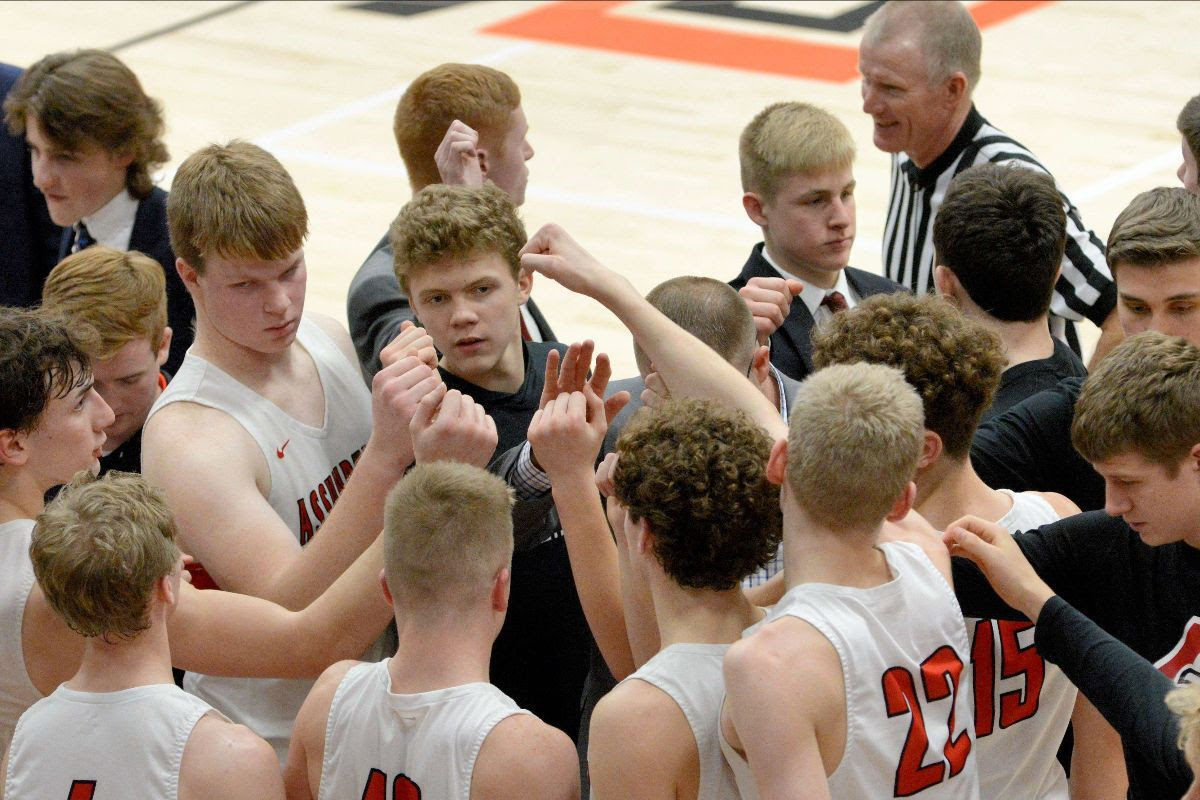
MVSTO is providing tuition assistance to 627 Scott County K-12 Catholic School students this year, including 8 participants in Assumption’s basketball program, 50 fifth graders attending one of our 4 Catholic elementary schools, and 12 members of the AHS Choir.
 
MVSTO has recorded $221,000 in increased gifts and pledges over the past week. We had a good week, but we’re running out of runway! There is still a need to raise an additional $245,500 to reach our state allowed cap of $1,324,143 by December 31.  If you have given in the past, you know how tax efficient this gift is, and we need your help again.
Everyone Wins! Iowa taxpayers contributing to Mississippi Valley School Tuition Organization (MVSTO) receive an Iowa tax credit equal to 65% of their contribution.

The remaining 35% is eligible to be deducted from the donor’s federal tax return. The MVSTO remains the most generous tax credit in the State of Iowa! Please check out our video for an explanation of the gift.

Everyone Wins When You Give to MVSTO!

HELP SCOTT COUNTY STUDENTS TODAY!

Donate Now
What is the Mississippi Valley School Tuition Organization (MVSTO)
and how does it work? Watch this short video to find out more.


Civic Oration Finalists

Watching civic oration speeches last week was a little weird.  Due to our COVID-19 mitigation practices for social distancing and to make a level playing field for students going into and out of remote learning, all 5th-8th graders submitted their speeches on video.  I was able to get into some 6th-8th grade classes while they watched speeches.  I am always amazed at civic oration, and this year was no different.  Students adapted to this new presentation method quite well.  Next year, if we can be back to normal, we’ll change things up a little bit too with civic oration and begin to add in some visual aspects, such as a few PowerPoint type slides.  It’s rare for people to give speeches without a few slides these days, and we’ll have civic oration evolve in that direction too.

Congratulations to the following students, listed in no particular order in their category, whose videos are advancing to the final round of competition.  For the final round of competition, speeches will be judged by outside-the-building guests.  Students compete in two divisions:  5th/6th grades and 7th/8th grades.  We do not expect to have results until mid-January.

Finalists in 5th grade:  Alison J., Peyton W., Natalie S., Hailey E., Noah F., and Priya K.

Finalists in 6th grade:  Quinn C., Rachel A., Payten P., Julia M., Ava S., and Maggie A.

Finalists in 7th grade:  Olivia F., Brooklyn M., Adam W., Aubrey R., Barbie K., and Ben A.

Finalists in 8th grade:  Lucy N., Dru D., Jacey M., Amalie Y., Seamus D., Braeden M.

COVID Data

Below is a link to a .pdf file that shows several graphs of Scott County and JFK data.  We did make two adjustments that updated some data points back to about November 24th for the JFK specific data.  I’ve also changed intervals on a couple of graphs so we can continue them better into the future.  To originally illustrate how fast things can change, I had used some daily data points, for example.  Some of these will be changed to the Tuesday and Friday data points that are used with some of the other graphs.  Scott County graphs reflect the data shared at our Wednesday meetings with the health department.  The time of day when the health department pulls its data can also make a difference in the numbers.  We did not have a meeting on December 23rd so our next update with the health department will be December 30th.

I’ll add a few comments below as well.

COVID Data, December 23, 2020

  • One of our big discussions on 12/16 with the health department was regarding vaccinations.  Educators are in in group 1-B, and speculation was that they would be able to receive vaccination in February-March.  Students, however, are way after that time period, and there’s not even a vaccination yet approved for those under 16 years old.  That means that mitigation efforts like mask wearing, social distancing, contact tracing and quarantining, etc. will continue all school year.  Schools and school districts will also need to continue with remote learning options, intermittent whole class or building shut downs, and hybrid educational models throughout the rest of the school year.
  • At JFK, we have also begun speculating about next year.  With budgeting beginning for next year, we’re trying to make decisions about what will be needed in the fall.  Will we need Zoom accounts for teachers?  Will we need to purchase additional online storage for recorded Zoom sessions of instruction as we’ve done for this year?  Can we afford to maintain a 1 to 1 student to Chromebook/tablet ratio in all of K-8?  (One time federal funding helped us get there.)  What will enrollment look like?

Upcoming Dates

  • See the school calendar on our website regarding ECLC over the break.
  • Jan 4:  School starts again
  • Jan 14:  Parent University via Zoom.  Topic:  Screen time (How fitting?!)
  • Jan 18:  Martin Luther King Day, no classes.
  • Jan 21:  Home & School
  • Jan 29:  End of 2nd Quarter
  • Jan 30 – Feb 6:  Catholic Schools Week

Catholic Schools Week

Almost all of our normal Catholic Schools Week activities involved large gatherings that just won’t be possible this year.  Along with themed attire each day, below are some of our ideas:

  • Movie day with candy suckers
  • Bingo day
  • Pizza and Virtual Field Trip Day
  • Minute to Win It Day
  • Class Act (recorded) and Ice Cream Day

Stay Well

I hope you had an enjoyable Christmas holiday.  It was, indeed, different than normal, but we were able to make ours special anyway.  On to New Year’s!

Chad

Principal’s Post for December 13, 2020

Last Week Before Christmas Break

This is our last week before Christmas break, and there is no early dismissal on December 18th.  There is, however, a red, green, white, and Christmas attire out of uniform dress day on Friday.  School starts after the break on January 4th.  See the school calendar regarding ECLC over the break.

Last week, I mentioned that it was going to be harder for me to really get into the Christmas spirit without being able to watch the little ones all dressed in their Christmas clothes singing Christmas songs in the church with all the decorations lit up.  Maybe that challenge is a good thing for me.  It’s definitely easier to do the same thing each year perhaps even as if they’re on auto-pilot.  This year, I have to really think about things and be deliberate.  Maybe that will be good for me.  And, maybe I’ll appreciate it even more when we can do the annual traditions we’ve cherished for so many years!

Below is a link to a .pdf file that shows several graphs of Scott County and JFK data.  I’ll add a few comments below as well.

COVID Data, December 11, 2020

  • A pondering from the Scott County Health Department on Wednesday was whether or not we were “bottoming out” with our COVID rates.  The Scott County 14 Day Positivity Rate, for example, declined from 26-27% about three weeks ago and has hovered between about 18-19% for the last two weeks.  The positivity rate is the “big” data point used by the Iowa Department of Education for schools.
  • The CDC risk of transmission in schools slides show Scott County’s numbers are still falling but have a long way to go to return to even a moderate risk level in the first two core indicators.
  • Please remember that the maps with rates of positive cases per school district boundaries are not just student counts.  They include residents of any age who live within the boundaries of the four school districts in Scott County.
  • The second JFK graph shows the percent of absences due to people being “sick” with something that is reportable to the health department and can be transmitted from one person to another.  I have added a note in the graph regarding the figure that may be examined by the Iowa Department of Education should a school/district apply for a two week closure.  The DE would be looking for a 10% illness absenteeism rate.  Our rate on Friday was about 1.5% up from 1% the previous Friday.
  • The third JFK graph shows the percentage of students and staff that are quarantining either because they are required to because they are close contacts or they are “voluntarily” quarantining, which usually occurs as they wait for another family members’ tests results and they are not yet required to quarantine.  On Friday, we had about 3% of students and staff quarantining.
  • The fourth JFK graph combines some of the sickness and quarantining data.  On Friday, we had approximately 4.38% of students and staff who were expected to be in the building absent due to illness or quarantining.  I have added notes regarding which figures we would be looking at for shorter term closures for the building or for classrooms.
  • The fifth JFK graph shows the total percent of staff and students who are expected to be in the building but were absent.  Even during a pandemic, other things continue, and people are absent for a variety of other reasons.  Our total absenteeism rate was 7.79% on Friday up from 7.13% the previous Friday.  The graph also shows the total percent of enrolled students and employed staff who were not in the building:  14.64% on Friday, including the long-term remote learners.
  • Meaning needs to be attributed to the numbers and can sometimes be relative.  In Iowa, we’re glad to see our numbers falling.  Others in my own family, however, are getting much more anxious about COVID in their states/counties as their rates are increasing, and their rates are still significantly less than ours!  My youngest daughter will be coming home from college for Christmas next weekend, and, even though she’s been quarantining as best she can in preparation to come home, she’s nervous about possibly bringing COVID home with her.  I want to tell her, “Do you know where you’re coming from and where you’re going to?  You’re more likely to get COVID here than you are in bringing it with you.”  On a personal note, my prayers are also with our extended family members who lost a relative to COVID this week.

End of the Mid-Quarter Was Friday

The end of the 2nd mid-quarter was Friday.  Mid-quarter reports should be emailed to families before Christmas break.

Online JFK Spirit Store

Click HERE for the online JFK spirit store developed by Home & School.  Winter hats and scarves are now available, as well as some great stocking stuffer ideas.

What Happens to Financial Assistance if the STOs Are Not Fully Funded?

That’s a question we’d rather not face in Scott County.  More than 620 students in Scott County are benefiting from financial assistance through the Mississippi Valley School Tuition Organization (MVSTO).  In 2019-20, that figure represented about 35% of all students, and JFK had 36% of its K-8 students receiving financial assistance.  The need only increased in 2020, and no one really knows what 2021-22 will bring.

In order to provide the level of financial assistance needed each year, however, donations are also needed each year, and we are significantly behind where we need to be.  Donations to the MVSTO are unique in that they benefit both students and donors.  Students receive the financial assistance needed by their families so they can attend Catholic/private schools, and donors receive a 65% tax CREDIT, not deduction, off of their Iowa taxes, AND the other 35% is a charitable deduction on their federal taxes.  A $100 donation to the MVSTO, for example, allows one to reduce one’s Iowa tax bill by $65, and, at the 32% federal income tax bracket, one might be able to reduce one’s tax bill by about $11.  If you follow the math, a student receives the $100 benefit in financial assistance while the donor has a net cost of, not $100, but only $24!


Donations for this year’s taxes must be made by December 31st.  Act now!  Use the following link for more information and the forms needed:  https://www.mvsto.org/

Chad


Principal’s Post for December 6, 2020

Free Lunches to Continue

Free school lunches for all students will now continue through the end of the school year or until federal funding runs out.

Civic Oration Looks Even More Different this Year

As we looked at the numbers of students who are doing long-term remote learning and of students who are moving in/out of short-term remote learning, we have decided to make even more changes to civic oration this year.  To try to “level the playing field” for everyone, all speeches will be submitted by recording.  There will be no “live” rounds of competition.  I’m not sure it will be any easier.  Based upon my limited experience of just trying to make a few videos myself, making a recording with no audience at all to speak to is even harder than speaking in front of people!  Students will submit their recordings before Christmas break, and staff will determine the finalists.  Guest judges will view the finalists’ speeches over Christmas break.

Davenport Community School District Continues Online

The DCSD’s application to extend their 100% remote learning was approved for two weeks.  They will be 100% remote through December 16th.

End of the Mid-Quarter is Friday

The end of the 2nd mid-quarter is Friday.  Mid-quarter reports should be emailed to families before Christmas break.

Two Weeks Until Christmas Break — Can We Make It?

There are two full weeks of school until Christmas break, and there is no early dismissal on December 18th.  Personally, I’m not sure how I’m going to make it without a K-2 Christmas show in the church this year!  I never really get into the Christmas spirit until watching the little ones all dressed in their Christmas clothes singing Christmas songs in the church with all the decorations lit up.

So far, we have not seen a rise in our absences since Thanksgiving.  In fact, they were lower this week than they have been for several weeks.  The Scott County Health Department is very cautiously optimistic and hoping it isn’t just a “calm before the storm” situation.  Please continue to think about what your plans would be until Christmas break, if  your students cannot continue with face-to-face instruction.  This past week we were discussing options with our own staff members who have children.  It’s hard for them to be teaching remotely too when they have their own children who are also supposed to be online at the same time with remote learning.

Below is a link to a .pdf file that shows several graphs of Scott County and JFK data.  I’ll highlight a couple of things below as well.

COVID Data, December 4, 2020

  • Confirmed and epi-linked cases 14-day moving average:  Note how vertical the red line was in the beginning of November.
  • The Scott County 14 Day Positivity Rate is the “big” data point used by the Iowa Department of Education for schools.  The most recent peak was just a little higher than the graph shows as the graph shows data for about every Wednesday.  Today, the rate is even lower at 18.7%.  However, that is still considered by Iowa’s definitions to be “substantial controlled” for the community.  It should be noted that definitions are somewhat locally determined.  New York City, for example, closed schools when they hit a 3% positivity rate.  New York has recently changed that position as more research is available regarding schools since they chose that figure before the school year began.
  • The CDC risk of transmission in schools slides show Scott County’s data has a long way to go to return to even a moderate risk level in the first two core indicators.
  • The maps with rates of positive cases per school district boundaries are not just student counts.  They include residents of any age who live within the boundaries of the four school districts in Scott County.
  •  The first graph for JFK specific data shows how fast our long-term remote learners increased in November.  These are students for whom their parents have chosen remote learning as the regular instructional method.  That percentage doubled in about two weeks.
  • The second JFK graph shows the percent of absences due to people being “sick” with something that is reportable to the health department and can be transmitted from one person to another.  I have added a note in the graph regarding the figure that may be examined by the Iowa Department of Education should a school/district apply for a two week closure.  The DE would be looking for a 10% illness absenteeism rate.  Our rate on Friday was below 1%.
  • The third JFK graph shows the percentage of students and staff that are quarantining either because they are required to because they are close contacts or they are “voluntarily” quarantining, which usually occurs as they wait for another family members’ tests results and they are not yet required to quarantine.  At our peak before Thanksgiving, more than 10% of students and staff were quarantining.  This figure may be a bit misleading before Thanksgiving, however, as there were some families that were just taking extra precautions before Thanksgiving, and a short week meant kids would not miss as much as usual.
  • The fourth JFK graph combines some of the sickness and quarantining data.  On Friday, we had approximately 5.5% of students and staff who were expected to be in the building absent due to illness or quarantining.
  • The fifth JFK graph shows the total percent of staff and students who are expected to be in the building but were absent.  Even during a pandemic, other things continue, and people are absent for a variety of other reasons.  Our total absenteeism rate was 7.13% on Friday.  The graph also shows the total percent of enrolled students and employed staff who were not in the building:  14.86% on Friday, including the long-term remote learners.
  • The last JFK graph illustrates, again, how fast things can change.  On Friday, November 13th, we had 4.26% of the staff absent.  On Monday, November 16th, that figure jumped to 14.9%.  Two days later it was at 19.1%, and we were doing day-to-day scrambling to determine substitutes and other duty coverages.  Those figures did not even take into consideration a maternity leave or an absence due to surgery recovery.  Then, it was over.  On the first work day after Thanksgiving, staff absenteeism fell to 6.38%.

Below is the document, again, that we are using for guidance regarding a face covering requirement and building/grade/class closures.

COVID Metrics for building closure, face masks, 11-26-2020

Online JFK Spirit Store

Click HERE for the online JFK spirit store developed by Home & School.  Winter hats and scarves are now available, as well as some great stocking stuffer ideas.

Virtual Book Fair

It doesn’t look like we’ll be able to have our annual book fair during Catholic Schools Week in January.  Instead, we are hosting an online book fair before Christmas.

Shopping for books for your children for Christmas?  Come see our online Scholastic holiday book fair.  Our online book fair will be available through Friday, December 11th.  Purchases will be shipped directly to your home.  A portion of sales goes to JFK and allows us to buy new books for our library.

To shop our online book fair, go to https://www.scholastic.com/bf/olvjfk or see the front page of the JFK website.

Mississippi Valley School Tuition Organization (STO)

More than 620 students in Scott County are benefiting from financial assistance through the Mississippi Valley School Tuition Organization (MVSTO).  In order to provide the level of financial assistance needed, donations are needed each year.  Donations to the MVSTO are great because they benefit both students and donors.  Students receive the financial assistance needed by their families so they can attend Catholic/private schools, and donors receive a 65% tax CREDIT, not deduction, off of their Iowa taxes, AND the other 35% is a charitable deduction on their federal taxes.  A $100 donation to the MVSTO, for example, allows one to reduce one’s Iowa tax bill by $65, and, at the 32% federal income tax bracket, one might be able to reduce one’s tax bill by about $11.  If you follow the math, a student receives the $100 benefit in financial assistance while the donor has a net cost of, not $100, but only $24!


Donations for this year’s taxes must be made by December 31st.  Act now!  Use the following link for more information and the forms needed:  https://www.mvsto.org/

Chad

Principal’s Post for November 29, 2020

JFK Lunch Program Resumes, and Free Lunches to Continue

Our lunch program will resume on November 30th.  Thank you for your cooperation during its closure.

Free school lunches for all students will now continue through the end of the school year or until federal funding runs out.

K-8 One to One:  Take Devices Home Daily

Grades K-8 are now one-to-one with iPads or Chromebooks.  Students will be taking their devices home daily so they can be used, as needed, both at school and at home.  Internet filtering on school devices continues in all locations, but, of course, please make sure you monitor what students do on all of their devices.  Things can still get through the filters, and what the filters do not block, you may still not consider appropriate for your own children, according to their ages, your family’s preferences, etc.

A big shout out goes to Dianne Siefers, our technology coordinator.  She has been working crazy hours to roll out new equipment and keep staff and students supported.  Thank you, Ms. Siefers!  We’d be lost without you!

Students to Receive the Sacrament of Reconciliation

First Reconciliation options are Thursday evening and Saturday morning for those receiving the sacrament for the first time and their families.  JFK students in grades 3-8 will receive the sacrament in a socially distant manner on Tuesday.  We will have four stations set up:  the sacristy, “servers'” room, gathering space, and gathering space meeting room.  Using these locations will allow privacy but also plenty of space for the student and priest.  If we run out of time for all students, Fr. Jake and/or Fr. Scott will continue on a later date.

Civic Oration Looks a Little Different this Year

How we do civic oration in grades 5-8 will also look a little different this year due to COVID-19.  We will use large spaces for the first round:  church, gym, and parish center.  Fifth graders will give their speeches on the following day, in order to use one of these larger spaces.  There will be no second round of competition.  The final or “parish center” round will not be in front of a large live audience.  Finalists will compete from the church, and we’ll use our livestreaming and recording capabilities.  Judges will view the recorded speeches over Christmas break.

Davenport Community School District Continues Online

The DCSD’s application to extend their 100% remote learning was approved for two weeks.  They will be 100% remote through December 16th.

We Made It Through Thanksgiving

We made it with face-to-face instruction through Thanksgiving!  That feat should not be downplayed, especially with the staffing challenges we faced over the last two weeks!  Our next challenge will be with another anticipated surge after the Thanksgiving holiday.  While JFK’s attendance rates may stabilize a bit at the beginning of the week with some people returning from vacation and others ending their quarantining periods, I anticipate absences increasing as the week progresses.  Days 4-7 after an exposure to COVID-19 seem to be when symptoms begin.  The question will fast become, “Can we make it until Christmas?”  Many of our conversations and preparations are to make sure we can be ready to go to 100% remote for entire classes or the building, if we don’t make it.  Please start thinking about what your plans would be until Christmas break, if  your students cannot continue with face-to-face instruction.

JFK Specific Data on Wednesday, November 25, 2020

Here’s what we had at JFK on Friday, November 20th.  The percentages are based upon the number of staff and students that are expected to be in the building; they do not include those who have chosen to do long-term remote learning.  Slight variations in past data from previous Principal Posts may occur due to coding updates.  Notice that while the percent of people who are “sick” is rather low, the percent of people required to quarantine continues to rise.

Percent of students and staff absent due to COVID or COVID symptoms (and getting tested):  1.03%.  November 20:  3.13%.  November13:  0.25%

Percent of students and staff absent due to other illnesses that we have to report to the health department, which includes gastrointestinal and respiratory issues (the types of things for which you give symptoms when you call your student in “sick”):  0.78%.  November 20:  1.20%.  November 13:  1.49%    These numbers are probably pretty small because just about everything seems to be a COVID symptom.

Percent of students and staff absent because they are, thus, “sick:” 1.81%.  November 20:  4.34%.  November 13:  1.74%

Percent of students and staff absent who are quarantining because they were close contacts to a positive COVID case and required to quarantine:  8.27%.  November 20:  5.54%.  November 13:  3.72%

Percent of students and staff absent who are voluntarily quarantining because they may be a close contact if the person with whom they had close contact receives a positive test result or for other voluntary reasons:  4.13%.  November 20:  1.20%

Total percent of students and staff absent because they are “sick,” required to quarantine, or voluntarily quarantining:  14.21%.  November 20:  11.04%

Percent of students and  staff who are absent for other reasons, including vacations, funerals, appointments, transportation issues, needing a mask free day, unknown, etc.:  8.53%.  November 20:  3.62%

Total percent of students and staff  expected to be in the building but were absent:  22.74%.  November 20:  14.70%.  November 13:  10.42%

In addition, we have 8.56% of the student body doing long-term remote learning and not expected to be in the building.  That figure has grown from 6.80% on November 20th and 4.53% on November 13th.

Scott County Data

For those keeping up with some of the data I’ve reported regularly for Scott County, see the below.  The health department cautions, however, that the COVID numbers are going to be skewed in many directions due to the holidays.  There will likely be low reported numbers as test sites and labs were closed for the holiday followed by a spike as test sites and labs reopen and clear the backlog.

  • As of November 25th, Scott County’s 14 day average for new cases was at a RATE of 1,975 per 100,000 persons down from 1,989 the previous week.
  • The 14 day positivity rate calculation used by the Department of Education for Scott County is at 20.2% today, which is down two weeks in a row.
  • The percent of hospital beds used for COVID patients is at 30%, down from last week’s 33%.
  • According to the CDC’s document regarding the risk of COVID-19 transmission in schools (see the link below), the risk of transmission in Scott County schools continues to be in the highest levels of risk according to two of the primary indicators:  the number of new cases per 100,000 population and the positivity rate.  The secondary indicators are more volatile.  Any downward movement in the percent change in number of new cases per 100,000 is considered good news, for example, even if the raw numbers are way too high.  The hospital metric for total beds in use is also impacted by actions that hospitals are taking, like putting multiple patients in the same rooms, cancelling overnight procedures, converting wards from one usage to COVID use, and doing more extensive “home monitoring” of patients to try to keep people out of the hospital if they don’t need to be seen and yet into the hospital sooner if their symptoms do warrant it.  Even with these actions, 30% of all hospital beds in Scott County are being used by COVID patients.

CDC indicators, thresholds of COVID transmission in schools

Last week I stated that, due in part to the changing situation with the hospital information and the access to this information being only weekly, we have made a change to the metrics shared with you regarding building/grade level closures and face covering requirements.  We shifted the community spread metric for a face covering requirement to just the 14 day county positivity test rate, a data point always available to us.  When I re-typed it, however, I inadvertently switched from a figure related to the CDC indicators document to a Department of Education figure.  I have made that correction in the document linked below.  I have also tried to be more specific regarding which data points we are using:  all illnesses; all illnesses and required quarantining; COVID or its symptoms; and all illnesses and required and voluntary quarantining.

Note:  Building/grade level closures would probably need the thresholds to be hit for a few days in a row or with an average before action is taken.  Everyone might need a little advance notice anyway!  The threshold figures also do not include those who are not expected to be in the building because they have chosen long-term remote learning.

COVID Metrics for building closure, face masks, 11-26-2020

Thanksgiving Food Color Day Was Fun

Dress in the color(s) of your favorite Thanksgiving food was a blast and led to some great conversations.  I was mashed potatoes and cranberries with my white shirt and dark red tie.  Our winning homeroom, which received bragging rights and the “golden star,” was 3W.

Online JFK Spirit Store

Click HERE for the online JFK spirit store developed by Home & School.  Winter hats and scarves are now available, as well as some great stocking stuffer ideas.

Virtual Book Fair

It doesn’t look like we’ll be able to have our annual book fair during Catholic Schools Week in January.  Instead, we are hosting an online book fair before Christmas.

Shopping for books for your children for Christmas?  Come see our online Scholastic holiday book fair.  Our online book fair will be available starting Monday, November 30th through Friday, December 11th.  Purchases will be shipped directly to your home.  A portion of sales goes to JFK and allows us to buy new books for our library.

To shop our online book fair, go to https://www.scholastic.com/bf/olvjfk or see the front page of the JFK website.  Note that the fair starts on Monday, and all the links should become active at that time.

Mississippi Valley School Tuition Organization (STO)

More than 620 students in Scott County are benefiting from financial assistance through the Mississippi Valley School Tuition Organization (MVSTO).  In order to provide the level of financial assistance needed, donations are needed each year.  Donations to the MVSTO are great because they benefit both students and donors.  Students receive the financial assistance needed by their families so they can attend Catholic/private schools, and donors receive a 65% tax CREDIT, not deduction, off of their Iowa taxes, AND the other 35% is a charitable deduction on their federal taxes.  A $100 donation to the MVSTO, for example, allows one to reduce one’s Iowa tax bill by $65, and, at the 32% federal income tax bracket, one might be able to reduce one’s tax bill by about $11.  If you follow the math, a student receives the $100 benefit in financial assistance while the donor has a net cost of, not $100, but only $24!

Donations for this year’s taxes must be made by December 31st.  Act now!  Use the following link for more information and the forms needed:  https://www.mvsto.org/

What I Learned This Thanksgiving

  • Some traditions can continue during COVID:  having the Macy’s Thanksgiving Day Parade and National Dog Show on the TV in the background, good food and football in the afternoon, and a “gathering” of family, even if only by Zoom.
  • Thanksgiving dinner is just as good without turkey.
  • Whether there’s just two or 42 for Thanksgiving dinner, I can still overeat.
  • Thanksgiving dinner for two people yields lots of leftovers, and I can continue to overeat.
  • I don’t miss Black Friday at all.
  • Not mixing households was a good idea.  Of the approximately 40-50 people we’d normally meet with over Thanksgiving:
    • One was voluntarily quarantining due to a possible exposure
    • One was self-isolating while waiting for test results
    • One lost the sense of smell Thanksgiving night, and Friday’s test results came back positive

Chad


Principal’s Post, November 21, 2020

It’s Complicated

I’m not sure which is my new mantra, “With COVID-19, everything is complicated” or “With COVID-19, nothing is easy.”  Back in the spring, I listed about 13 different sources for guidelines/views regarding dealing with COVID in schools, and I even missed including the Iowa Department of Human Services (DHS), which licenses ECLC, 3 year old preschool, and “aftercare” for 5-12 year olds:

  1. National leadership, such as what the president or the federal coronavirus task force says
  2. The Center for Disease Control (CDC)
  3. Iowa Governor Reynolds’ proclamations and statements
  4. Iowa Department of Education (DE)
  5. Iowa Department of Public Health
  6. Iowa COVID regions
  7. Scott County, particularly the Scott County Health Department
  8. City of Davenport
  9. Diocese of Davenport
  10. Davenport Community School District (DCSD)
  11. What other area churches and Catholic schools are doing
  12. Everyone’s own opinions and practices
  13. OLV/JFK itself

The guidance they issue (and sometimes rescind) tends to change over time.  Sometimes it is even contradictory.  DHS, for example, says to notify families of a positive case in the childcare setting.  The DE, however, says to only share numbers of 0 and the range of 1-5, and then one can share actual numbers once 6 or more cases are confirmed, in order to maintain people’s privacy.  We have followed these dual sets of guidance this past week.  This week we have had 1-5 three year olds – 8th graders and staff absent due to having tested positive themselves.  Since school began, we have had a total of eight persons test positive.  We work together with families to determine self-isolation dates and contact tracing as it might relate to other students/staff.  We also do the same to determine dates for quarantining students or staff when someone is a close contact either with someone outside of school or within school.  Most often we are talking to families about these dates long before the official “contact tracers” these days.  Occasionally, our dates are off a day or two from the health department as sometimes people remember things differently, or the interpretation might be different.  Was that “tickle” in one’s throat really a “sore throat?”  Was the fatigue one felt during the day due to being awake all night or really the start of a COVID symptom?  Answers aren’t always simple.

It gets even more complicated.  The Iowa Department of Public Health now says that if both the positive case and close contact were wearing masks, there is no need for an asymptomatic close contact to quarantine.  The Diocese of Davenport, however, does not allow us to follow that guidance.  So while Public Health may not be telling certain people to quarantine, we might be.

Just determining what “type” of absence to call something can sometimes be complicated.  When people are quarantining as an extra precaution, even though Public Health doesn’t require them to because a case has not been confirmed yet, are they absent because they are a close contact and quarantining?  Without the positive case identified yet, they, technically are not yet a close contact.  In about the middle of this week, we started to pull these numbers out separately from “other absences” — see below.)  There are federal definitions related to payroll, definitions for diocesan reporting, and definitions for Public Health and our internal tracking.

JFK Specific Data on Friday, November 20, 2020

Here’s what we had at JFK on Friday, November 20th.  The percentages are based upon the number of staff and students that are expected to be in the building; they do not include those who have chosen to do long-term remote learning:

Percent of students and staff absent due to COVID or COVID symptoms (and getting tested):  3.12%.  November13:  0.23%

Percent of students and staff absent due to other illnesses that we have to report to the health department, which includes gastrointestinal and respiratory issues (the types of things for which you give symptoms when you call your student in “sick”):  1.20%.  November 13:  1.41%    These numbers are probably pretty small because just about everything seems to be a COVID symptom.

Percent of students and staff absent because they are, thus, “sick:”  4.32%.  November 13:  1.64%

Percent of students and staff absent who are quarantining because they were close contacts to a positive COVID case and required to quarantine:  5.52%.  November 13:  3.52%

Percent of students and staff absent who are voluntarily quarantining because they may be a close contact if the person with whom they had close contact receives a positive test result:  1.20%  (We started to separate these absences from “other” just this week.)

Total percent of students and staff absent because they are “sick,” required to quarantine, or voluntarily quarantining:  11.04%

Percent of students and  staff who are absent for other reasons, including vacations, funerals, appointments, transportation issues, needing a mask free day, unknown, etc.:  3.6%

Total percent of students and staff  expected to be in the building but were absent:  14.63%.  November 13:  9.86%

In addition, we have 6.80% of the student body doing long-term remote learning and not expected to be in the building.  That figure has grown from 4.53% on November 13th and will increase, again, on Monday.

Scott County Data

For those keeping up with some of the data I’ve reported regularly for Scott County, see the below:

  • As of November 18th, Scott County’s 14 day average for new cases was at a RATE of 1,989 per 100,000 persons.
  • The 14 day positivity rate calculation used by the Department of Education for Scott County is at 24.8% today.  The good news is that the rate is down from last week’s 26.6%!
  • The percent of hospital beds used for COVID patients is now up to 33%.
  • The health department said they are seeing a fairly steady percentage of positive cases among those aged 6-18 years old:  about 8% of all positive cases.  Of course, with more positive cases, the raw number of 6-18 years old testing positive has also increased.
  • According to the CDC’s document regarding the risk of COVID-19 transmission in schools (see the link below), the risk of transmission in Scott County schools continues to be in the highest levels of risk according to the number of new cases per 100,000 population, positivity rate, percent change in number of new cases per 100,000, and percent of hospital beds now used for COVID patients.  The percentage of hospital beds actually used, however, was still at the lowest risk level.  The hospital metrics may be somewhat misleading as the hospitals are starting to do more creative things like putting multiple patients in the same rooms, cancelling overnight procedures, converting wards from one usage to COVID use, and doing more extensive “home monitoring” of patients to try to keep people out of the hospital if they don’t need to be seen and yet into the hospital sooner if their symptoms do warrant it.

CDC indicators, thresholds of COVID transmission in schools

Due in part to the changing situation with the hospital information and the access to this information being only weekly, we have made a change to the metrics shared with you regarding building/grade level closures and face covering requirements.  We shifted the community spread metric for a face covering requirement to just the 14 day county positivity test rate, a data point always available to us.  Note:  Building/grade level closures would probably need the thresholds to be hit for a few days in a row or with an average before action is taken.  Everyone might need a little advance notice anyway!  The threshold figures also do not include those who are not expected to be in the building because they have chosen long-term remote learning.

COVID Metrics for building closure, face masks, 11-16-2020

Challenges This Past Week

Our biggest challenges this past week were due to staff absences.  We have about 30 licensed staff members (teachers, administrators, and student support specialist) and 17 support staff (office, technology, aides, lunch, custodians, library, etc.)   We had as many as ten of our 47 staff members absent on two days.  The absences were for a variety of reasons, some planned and some not planned, and as many as half were not related to any sort of illness or quarantining.  (Even during a pandemic, other things continue in our lives!)  When staff are absent, we try to hire substitute teachers and rearrange people’s duties and schedules in order to keep going.  Sometimes it works better than other times.  Even by shutting down the lunch program, for example, we still have about four hours of work per day that have to be covered in order for kids to safely eat their own sack lunches utilizing our current mitigation protocols.  I can’t say how many staff members need to be absent for it to become unmanageable; it just depends upon the positions.  Staffing issues also don’t often provide a lot of notice, and that makes things even harder.  Staffing is one of our weaker links in the ability to remain open.  We are bending, but we have not broken yet.

Conversations About the Future

It seems like we will make it with face-to-face instruction until at least Thanksgiving.  The question now is whether or not we’ll make it until Christmas.  Many of our conversations and preparations (when we have time to think about the future rather than just react to the present) are to make sure we can be ready if we don’t make it.  When you are thinking about your Thanksgiving plans and the three weeks between Thanksgiving and Christmas break, you should probably do some “what if…” thinking as well.  What will you do if there is a building/grade level closure for a period of time?

Upcoming Dates

November 24:  Thanksgiving Food Color Day:  Dress in the color(s) of your favorite Thanksgiving food.  Everyone will be given a sticker to identify their “food item.”  The homeroom with the most colors representing the most different foods will win bragging rights and the “golden” sign.  Students may be out of uniform on this day if they participate in the special theme but need to follow the out of uniform guidelines.

November 25:  Dismissal is at 12:15 p.m.  There is bus transportation.  There is no afternoon preschool.

November 26-27:  Thanksgiving break.  No classes.  No ECLC.

Online JFK Spirit Store

Click HERE for the online JFK spirit store developed by Home & School.  Winter hats and scarves are now available, as well as some great stocking stuffer ideas.

Mississippi Valley School Tuition Organization (STO)

More than 620 students in Scott County are benefiting from financial assistance through the Mississippi Valley School Tuition Organization (MVSTO).  In order to provide the level of financial assistance needed, donations are needed each year.  Donations to the MVSTO are great because they benefit both students and donors.  Students receive the financial assistance needed by their families so they can attend Catholic/private schools, and donors receive a 65% tax CREDIT, not deduction, off of their Iowa taxes, AND the other 35% is a charitable deduction on their federal taxes.  A $100 donation to the MVSTO, for example, allows one to reduce one’s Iowa tax bill by $65, and, at the 32% federal income tax bracket, one might be able to reduce one’s tax bill by about $11.  If you follow the math, a student receives the $100 benefit in financial assistance while the donor has a net cost of, not $100, but only $24!

Donations for this year’s taxes must be made by December 31st.  Act now!  Use the following link for more information and the forms needed:  https://www.mvsto.org/

Chad

November 15, 2020

Upcoming Dates

November 25:  Dismissal is at 12:15 p.m.  There is bus transportation.  There is no afternoon preschool.

November 26-27:  Thanksgiving break.  No classes.  No ECLC.

Online JFK Spirit Store

Click HERE for the online JFK spirit store developed by Home & School.  Winter hats and scarves are now available, as well as some great stocking stuffer ideas.

COVID Related

As I mentioned last week in our messages regarding wearing face coverings at all times regardless of social distancing and our decision to continue with face-to-face instruction at this time, what we have going on at JFK itself is currently manageable.  Here is some of our data from Friday.  (We will work to see if we can find a good way to show data in table or graph formats on our website for the future.)

Percent of students and staff absent due to COVID or COVID symptoms:  0.23%

Percent of students and staff absent due to other illnesses that we have to report to the health department, which includes gastrointestinal and respiratory issues (the types of things for which you give symptoms when you call your student in “sick”):  1.41%

Percent of students and staff who are, thus, “sick:”  1.64%

Percent of students and staff who are quarantining because they were close contacts to a positive COVID case: 3.52%

Total percent of students and staff who are “sick” or quarantining:  5.16%

Total percent of students and  staff who are absent for other reasons, including vacations, funerals, appointments, temporarily kept at home even though not required to quarantine, etc.:  4.7%

Note that the approximately 5% of the student body doing long-term remote learning is not included in any of these figures.

Total percent of students and staff who were absent for any reason:  9.86%

The only way we can manage to keep our schools open and provide face-to-face instruction is for everyone, young and old, both at school and, more importantly, it seems, outside of school, to practice the proven mitigation steps:  wear face coverings, practice social distancing, implement good face and hand hygiene by washing ones hands regularly and/or using hand sanitizer regularly, avoid large gatherings, stay home when ill, cooperate with contact tracers, follow isolation and quarantine guidelines, etc.

For those keeping up with some of the data I’ve reported regularly for Scott County, see the below:

  • As of November 11th, Scott County’s 14 day average for new cases was at a RATE of 1,330 per 100,000 persons.  On November 4th, the rate was 783 per 100,000.  The CDC indicates that even moderate risk of transmission in schools is in the 20 to <50 rate of cases per 100,000.  We haven’t seen that low data in Scott County since May.
  • The 14 day positivity rate calculation used by the Department of Education for Scott County is at 26.6% today.  Even by Iowa’s standards, the community transmission in Scott County is rated as Substantial Uncontrolled.  For some context, I again read this weekend about the city of New York.  They were concerned that the positivity rate was somewhere between 2.4% and 3%!  The lowest county in Iowa has a 14 day positivity rate average of 8.4%.
  • Genesis hospital officials announced this week that they were curtailing some of their procedures.  Six weeks ago, the percent of hospital beds used for COVID patients was at about 4.3%.  On November 4th, it was 14%.  On November 11th, it was 25%.
  • According to the CDC’s document regarding the risk of COVID-19 transmission in schools (see the link below), the risk of transmission in Scott County schools continues to be in the highest levels of risk according to the number of new cases per 100,000 population, positivity rate, and percent change in number of new cases per 100,000.  The percentage of hospital beds actually used, however, was at the lowest risk level.  The percent of hospital beds now used for COVID patients is in the highest risk level.
  • The health department also mentioned the challenges they are facing keeping up with the number of cases.  They are lucky to communicate with positive cases in a timely manner; to communicate with close contacts, if they can reach them at all, is becoming less and less timely.  People need to follow the self-isolation guidelines for positive cases or quarantine guidelines for close contacts on their own without waiting for contact from the health department.
  • The health department also mentioned (and superintendents at the weekly meeting agreed) that youth sports leagues outside of the schools are also creating challenges.  Not only do unmasked kids seem to be together, if even for just the carpool to the tournament, but so do their parents.

CDC indicators, thresholds of COVID transmission in schools

A couple of weeks ago, I shared with you some metrics that might be used should there be a need for a two week building shut-down, a one week building shut-down, a shut-down of a particular homeroom, a mask mandate for the building, and a mask mandate for a particular homeroom.  We currently have a “mask mandate” for everyone regardless of social distancing.  It’s a tough conversation to have:  act too soon and you risk compromising the education available, but act too late and you risk or have already risked compromising everyone’s health.  Below is our current draft.  It is currently being reviewed in light of what is happening around us in Scott County:

COVID Metrics for building closure, face masks, 10-21-2020

Below are the CDC guidelines for face coverings, which JFK has adopted:

  • Face coverings should have two or more layers of washable, breathable fabric
    • This guidance applies to gaiters as well.  Gaiters should have at least two layers or be folded to make two layers.
  • Face coverings should completely cover the nose and mouth
  • Face coverings should fit snugly against the sides of one’s face and not have gaps
  • Masks with exhalation valves or vents are not recommended as virus particles may escape
  • Face shields are not proven to be effective face coverings
Our complete Return to Learn Plan and Frequently Asked Questions documents are being updated to reflect the last few weeks’ changing situations.
In addition to the usual mitigation steps mentioned above, the White House Coronavirus Task Force also advised additional steps for Iowa, based upon October COVID numbers:
  • Do not gather without a mask with individuals living outside of your household
  • Always wear a mask in public places
  • Stop gatherings beyond immediate household until cases and test positivity decrease significantly
I’ve heard more and more families talking about the changes they are making for Thanksgiving, and they are making tough decisions.  My wife has a large extended family in the Quad Cities, and there have always been large gatherings with grandchildren, cousins, etc. all getting together.  Everyone, however, is just doing their own thing this year with their immediate family.  It’s been even hard for Lynn and I to decide what to do with our own kids as they are, essentially, separate households now living across the country.  For us, there will be no Thanksgiving gathering this year.  We’ll see what Christmas will be like!
Stay safe!

Chad

Video of Principal’s Message, November 11, 2020

COVID numbers continue to grow in Scott County and are beginning to tax our health care system.  Rates are at levels to trigger the guidance shared in previous Principal’s Posts for everyone to wear face coverings on campus regardless of social distancing.  Click HERE for the video announcement or use the following link/url:  https://kennedy-dav.zoom.us/rec/share/RIKTX5HtoBBsoPFD3YuQVAi76klszO5ujq6WRuLxuoY9U5sCN8QBMTN1IuMqc-YW.xnscB2Yz4xsJK0yQ?startTime=1605129267000

Stay safe!


Chad

November 8, 2020

Upcoming Dates

November 11:  JFK has school on November 11th, Veterans’ Day.  There is no bus transportation this day as the DCSD is not in session.

November 13:  Dismissal is at 12:15 p.m.  There is bus transportation.  There is no afternoon preschool.

November 25:  Dismissal is at 12:15 p.m.  There is bus transportation.  There is no afternoon preschool.

November 26-27:  Thanksgiving break.  No classes.  No ECLC.

Online JFK Spirit Store

Click HERE for the online JFK spirit store developed by Home & School

COVID Related and Face Coverings at Recesses 

Scott County’s COVID numbers are still not good and continue to get worse, as reported to the public and/or available through our weekly meeting with the health department.

  • We have topped 200 cases in a day this week in Scott County.  Just last week, I mentioned that we’ve had over 100 cases in a day.  Now, we’ve had at least one day, in if not more, with over 200 new cases in a day.  As of November 4th, Scott County’s 14 day average for new cases was at a RATE of 783 per 100,000 persons.  The CDC indicates that even moderate risk of transmission in schools is in the 20 to <50 rate of cases per 100,000.  We haven’t seen that low data in Scott County since May.
  • The 14 day positivity rate calculation used by the Department of Education for Scott County is at 20.3% today.  Even by Iowa’s standards, the community transmission in Scott County is rated as Substantial Uncontrolled.  I read how concerned they were in New York over the weekend as their positivity rate had increased to 2%!  The lowest county in Iowa has a positivity rate of 8.7%.  It is not automatic that when the county hits 15%, schools have to switch to 100% remote learning.  The county positivity rate is only one factor that the Department of Education would consider.  JFK’s building level absenteeism rate is actually doing well so far.  (See below.)
  • Genesis and Trinity hospital officials continue to express their concern.  Six weeks ago, the percent of hospital beds used for COVID patients was at about 4.3%.  On November 4th, it was 14%.  It was also reported that hospital officials were exploring to where they might be able to transfer patients and were looking as far away as Chicago without luck.
  • According to the CDC’s document regarding the risk of COVID-19 transmission in schools (see the link below), the risk of transmission in Scott County schools continues to be in the highest levels of risk according to the number of new cases per 100,000 population, positivity rate, and percent change in number of new cases per 100,000.  The percentage of hospital beds actually used, however, was at the lowest risk level, and the percent of hospital beds being used for COVID patients remained in the moderate risk level.

CDC indicators, thresholds of COVID transmission in schools

JFK’s own cumulative positivity rate since the beginning of the school year is 8.5%, with the increases most recently due not just to a few positive cases but because we’ve seen the lowest levels of testing since school actually began.  Still, since school began, we’ve only had between 1 and 5 positive cases.  Our attendance rate has actually also been doing well.  There’s only been a few days when attendance has dipped below 95%, which is considered the target attendance rate.

A couple of weeks ago, I shared with you some metrics that might be used should there be a need for a two week building shut-down, a one week building shut-down, a shut-down of a particular homeroom, a mask mandate for the building, and a mask mandate for a particular homeroom.  It’s a tough conversation to have:  act too soon and you risk compromising the education available, but act too late and you risk or have already risked compromising everyone’s health.  Below is our current draft:

COVID Metrics for building closure, face masks, 10-21-2020

Our most vulnerable times at school, in my opinion, are at recesses.  Students, like all others, are like magnets; they are attracted to one another.  Unless we are at our designated spots in classrooms or in the pews at church marked with black dots, we tend to move together.  It’s tough to remember to stay apart from one another.  Recess times are no different.  Here’s some information regarding recesses:

  • Morning and afternoon recesses are scheduled for 15 minutes.  By the time we go outside and come back in, the actual recess time is a little shorter than 15 minutes.  By Iowa’s definition of a close contact being within 6 feet for 15 consecutive minutes, there are really no close contacts at these recesses.  The new CDC definition of a close contact being within 6 feet for 15 cumulative minutes over a 24 hour period, however, would make contact tracing challenging at recesses, if Iowa adopts the new CDC definition.  The Iowa Department of Public Health has not yet made a final decision regarding any changes to the definition of a close contact.
  • Lunch recesses are 20 minutes.
    • We have examined our schedules to see if we can shorten these recesses to 15 minutes without much luck as everything is so intertwined.
    • We have considered blowing a whistle at the 15 minute mark and requiring students to do something that ensures separation from one another, but it doesn’t seem enforceable/feasible.
  • We have tried the idea of pods for outdoor recesses where kids only play with certain other kids.  That would help us with contact tracing at recesses.  Having kids in their pods at outdoor recess, however, is nearly impossible to monitor.
  • We have increased the number of balls available to students at recesses.  Students tend to stay apart from one another when playing with a ball.  It seems, however, that there are still too many kids too close to one another at recesses, and staff members are “always” having to break up groups or tell kids to separate.
  • We have moved at least one of our longer recesses to the blacktop so that we could better utilize our cameras, if we had to do contact tracing.  From experience, however, I can tell you that watching video for contact tracing is not a good use of time.
  • Whether it be in person or through video, it is difficult to determine what six feet of distance is without measuring.  If we can’t tell as adults what 6 feet is, neither can students.
  • I have received input from Lourdes and St. Paul’s regarding their recesses.  Lourdes has students wear face coverings for recesses, and St. Paul’s also requires face coverings at recesses unless students can be socially distant.
  • The Iowa Department of Public Health issued guidance stating that if a positive case and a close contact were both wearing face coverings, the close contact would not have to quarantine.  Although this guidance was not accepted by the Diocese of Davenport, and, therefore, does not impact its parishes or schools (including JFK), this guidance seems to increase the case even more for face coverings.

Based upon this information and with the intent of keeping as many kids in school as possible by limiting COVID transmission and quarantining, face coverings will now also be required at outdoor recesses.

The CDC has guidelines for face coverings, which JFK has adopted:

  • Face coverings should have two or more layers of washable, breathable fabric
    • This guidance applies to gaiters as well.  Gaiters should have at least two layers or be folded to make two layers.
  • Face coverings should completely cover the nose and mouth
  • Face coverings should fit snugly against the sides of one’s face and not have gaps
  • Masks with exhalation valves or vents are not recommended as virus particles may escape
  • Face shields are not proven to be effective face coverings
Our complete Return to Learn Plan and Frequently Asked Questions documents will be updated shortly to reflect the above.
In addition to the usual mitigation steps of wearing face masks, practicing social distancing, washing one’s hands frequently/using hand sanitizer, and staying home when ill, the White House Coronavirus Task Force also advised additional steps for Iowa, based upon October COVID numbers:
  • Do not gather without a mask with individuals living outside of your household
  • Always wear a mask in public places
  • Stop gatherings beyond immediate household until cases and test positivity decrease significantly
This past week, I was involved with two small businesses on the personal level that should be able to do better.  In one location, four office workers were in a space less than probably 80 square feet with no face coverings, and the employees working the customer service counter were side by side without masks both times I came into the business.  I, honestly, could not figure out why they even bothered with a sign that said something like, “Although Iowa does not require customers to wear face coverings, we strongly encourage everyone to do so.”  Why would customers take it seriously, when the business didn’t?  The other location was similar; everyone was working closely without face coverings.  We have to do better.
Stay safe!

Chad